
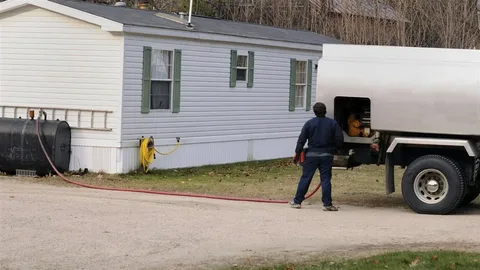
Searching “heating oil delivery near me” seems simple—until you actually start comparing options. Some sites show a rate but don’t explain service areas. Others list towns but don’t clarify delivery timing during storms. And many homeowners don’t realize that reliability in January is shaped less by what a company promises and more by how well their operation handles routing, safety, and communication.
This guide is a homeowner-first checklist for evaluating heating oil delivery near me options, avoiding common traps, and setting your home up for smooth deliveries all season. The goal isn’t to pick “the cheapest listing.” It’s to find the best overall fit: fair pricing, consistent winter service, and fewer stressful “are they coming today?” moments.
Step 1: Confirm they truly serve your exact location (not just “nearby towns”)
Table of Contents
A provider can be “near you” and still not reliably service your street, neighborhood, or road type—especially in winter. Before you compare anything else, confirm:
- Your town is in their active service area, not just “available on request”
- They service your area regularly (not once every two weeks)
- They deliver to your road type (private roads, long driveways, tight cul-de-sacs)
A quick question that reveals a lot:
“How often are you routing my neighborhood during peak winter?”
A confident provider can answer clearly.
Step 2: Compare reliability indicators (the stuff that matters when it’s 10°F)
When people search “heating oil delivery near me,” they often focus on per-gallon price. But reliability is what prevents emergencies, reschedules, and last-minute panic orders.
Here are strong reliability indicators:
1) Clear communication systems
- Do they confirm orders by text/email?
- Do they notify you of weather delays?
- Can you reach a human quickly during business hours?
Good communication reduces the “uncertainty tax”—the stress that makes homeowners over-order, switch providers randomly, or wait too long.
2) Dispatch and routing sophistication
Some companies run efficient routing with strong local coverage. Others are reactive. Ask:
- “Do you route by zones?”
- “Are you servicing my area on set days?”
- “How do you handle storm-driven backlogs?”
A company with structured routing is more likely to keep you warm during the weeks when everyone is ordering at once.
3) Safety standards (yes, this affects your delivery)
A provider that prioritizes safety will refuse unsafe access—steep icy driveways, unplowed private roads, or blocked tank areas. That might sound inconvenient, but it’s a sign of professionalism. Unsafe deliveries risk people, equipment, and property.
If a company claims they deliver “no matter what,” be cautious. Reliability doesn’t mean reckless.
Step 3: Understand minimums, fees, and what they don’t tell you on the listing
Some providers have minimum gallon requirements, delivery fees, after-hours policies, or service charges that don’t show up in the initial quote.
Before committing, ask:
- What is your minimum order?
- Are there delivery fees or surcharges (remote roads, small fills, emergency)?
- How do you handle no-heat situations?
- If I run out, do you require a service call to restart the system?
A transparent provider will answer without dodging. If the answers feel fuzzy, that’s a signal.
Step 4: “Cheap” can be expensive—here’s why
Even if the posted rate is lower, the true cost can rise if:
- your deliveries get pushed out repeatedly
- you run low and end up needing emergency delivery
- your system needs a bleed/prime after running out
- you’re forced to order at the worst time because you waited too long
The best provider isn’t necessarily the one with the lowest daily price—it’s the one that keeps your season smooth.
Step 5: The home-access checklist that prevents reschedules (and makes you easier to route)
Homeowners can unknowingly cause delivery delays by having poor access. If you want “fast fills,” you need to be “easy to deliver to.”
Here’s the checklist:
- Driveway plowed full width (10–12 feet if possible)
- Sand/ice-melt on slopes and tight turns
- Keep walkways clear to the tank/fill point
- Mark the fill/vent location with a reflective stake before snow season
- Unlock gates and secure pets
- Make sure house numbers are visible (especially after snowbanks)
In winter, “easy access” can be the difference between getting slotted in and getting pushed to the next routing day.
Step 6: Choose the right delivery method for your lifestyle
Two homeowners in the same town can have completely different best options depending on routine.
Will-call delivery
Best for homeowners who:
- check the gauge weekly
- like controlling timing
- don’t travel much in winter
If you choose will-call, set a refill trigger at ⅜ tank in peak winter. Don’t wait for ¼ unless it’s a mild week.
Automatic delivery
Best for homeowners who:
- travel
- manage rentals
- forget to check the tank
- want fewer winter decisions
Automatic delivery uses usage models (often weather-based) to estimate when you’ll need oil. It’s designed to reduce run-out risk.
Step 7: A quick scoring system to choose confidently
If you’re comparing multiple “heating oil delivery near me” results, score each provider 1–5 on:
- Service area match (do they truly route your neighborhood?)
- Communication (confirmations, updates, reachable support)
- Transparency (minimums, fees, emergency policies)
- Winter reliability (storm handling, routing structure)
- Safety standards (clear policy for access conditions)
The winner is usually obvious when you rate them this way—because it rewards operational quality, not just marketing.
Final takeaway
Searching heating oil delivery near me is the start—but choosing the right provider is about more than a quoted number. Prioritize true service coverage, structured routing, clear communication, and transparent policies. Then do your part: keep access clean and order before you’re in the danger zone. Put together, those steps lead to the best winter outcome: reliable deliveries, fewer delays, and no “no heat” panic.